The Swampcat
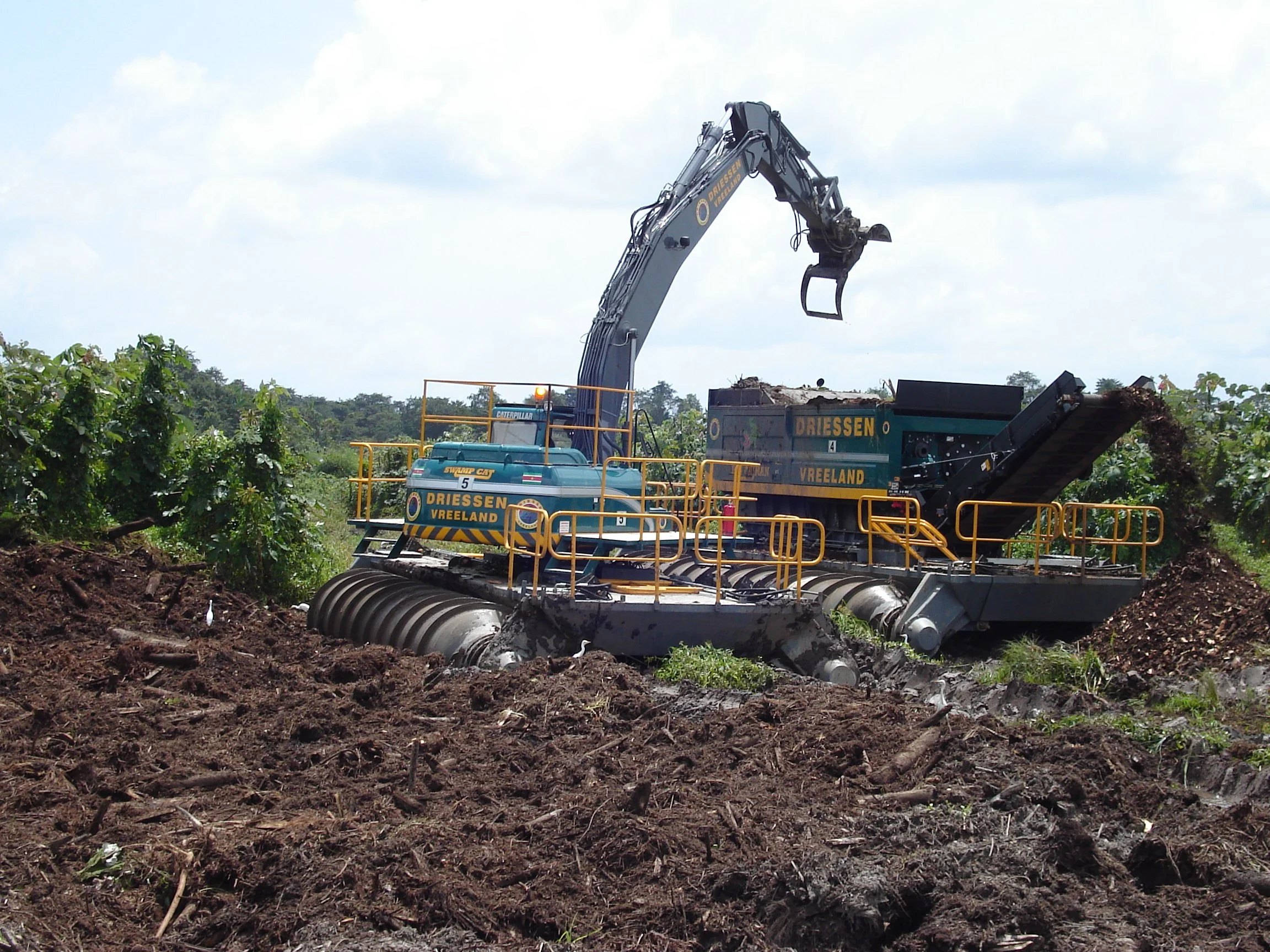
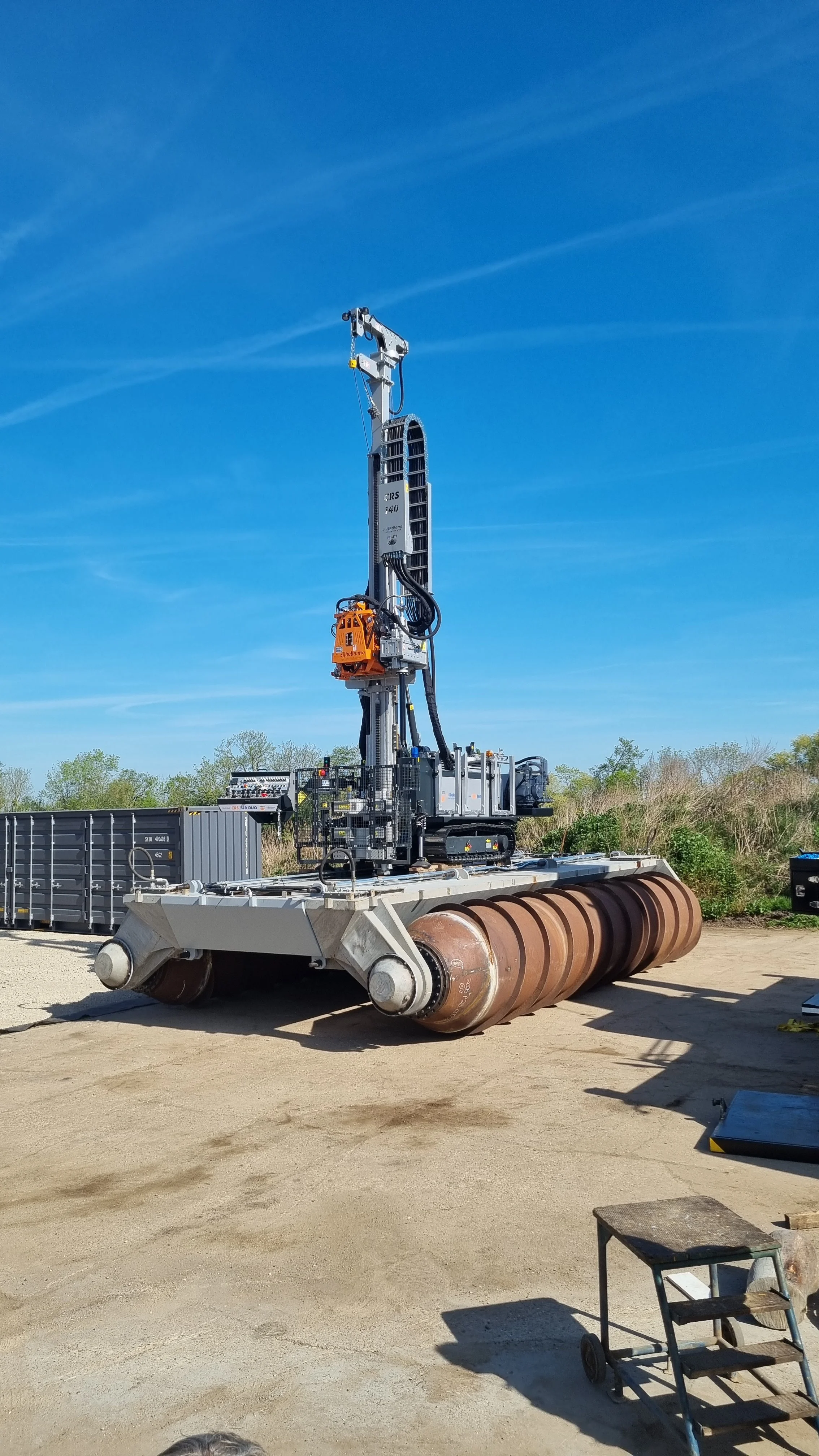
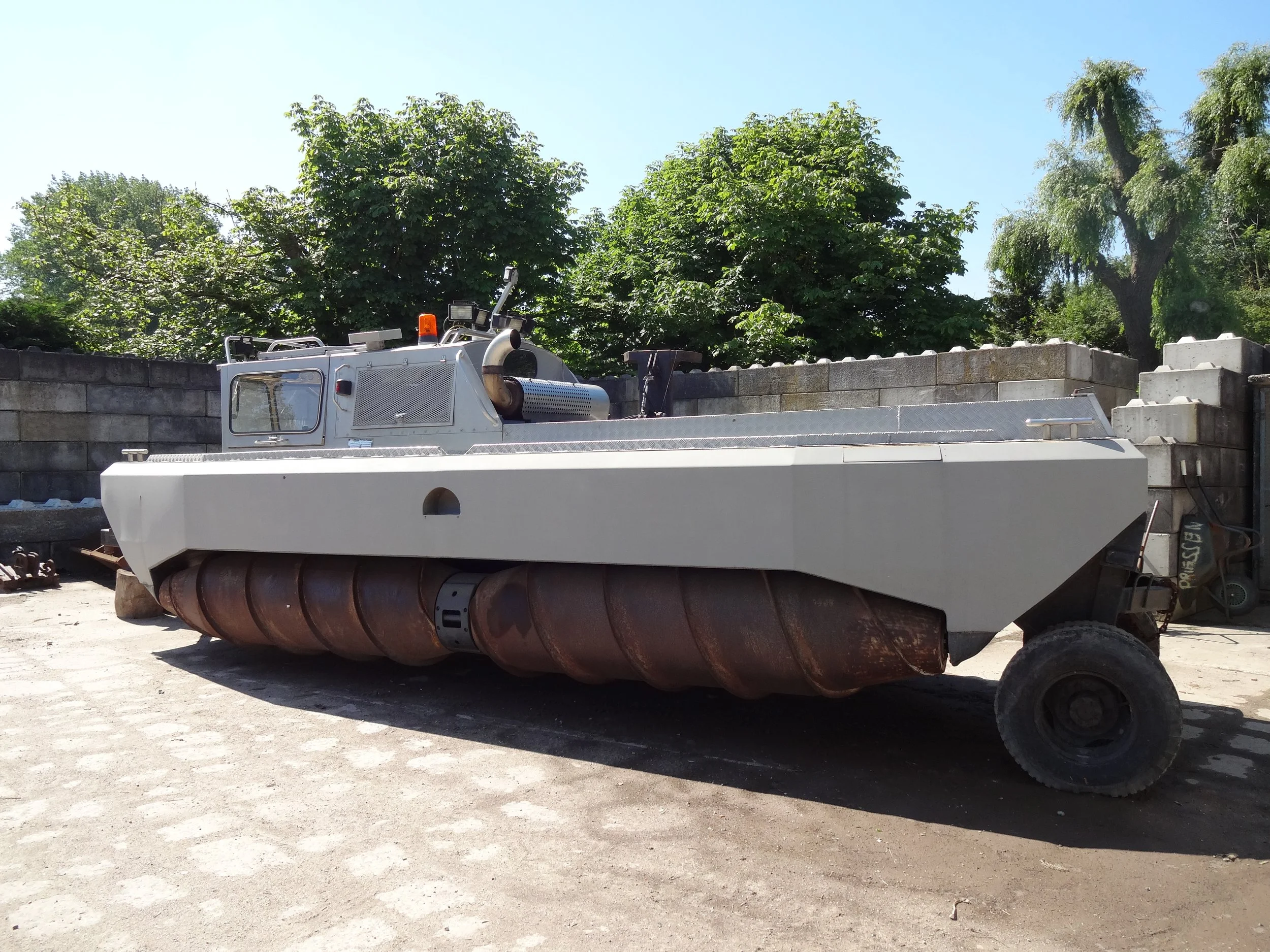
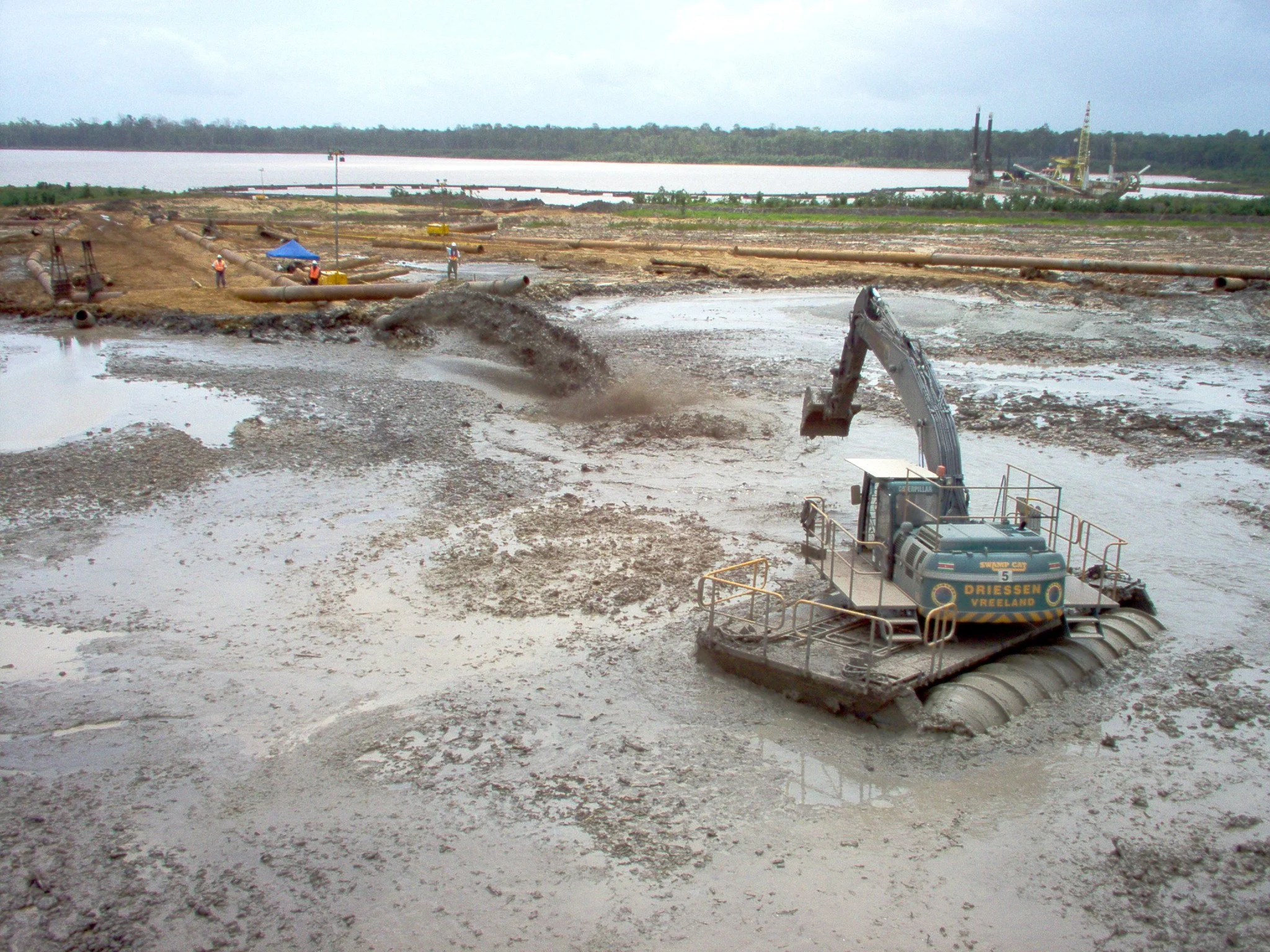
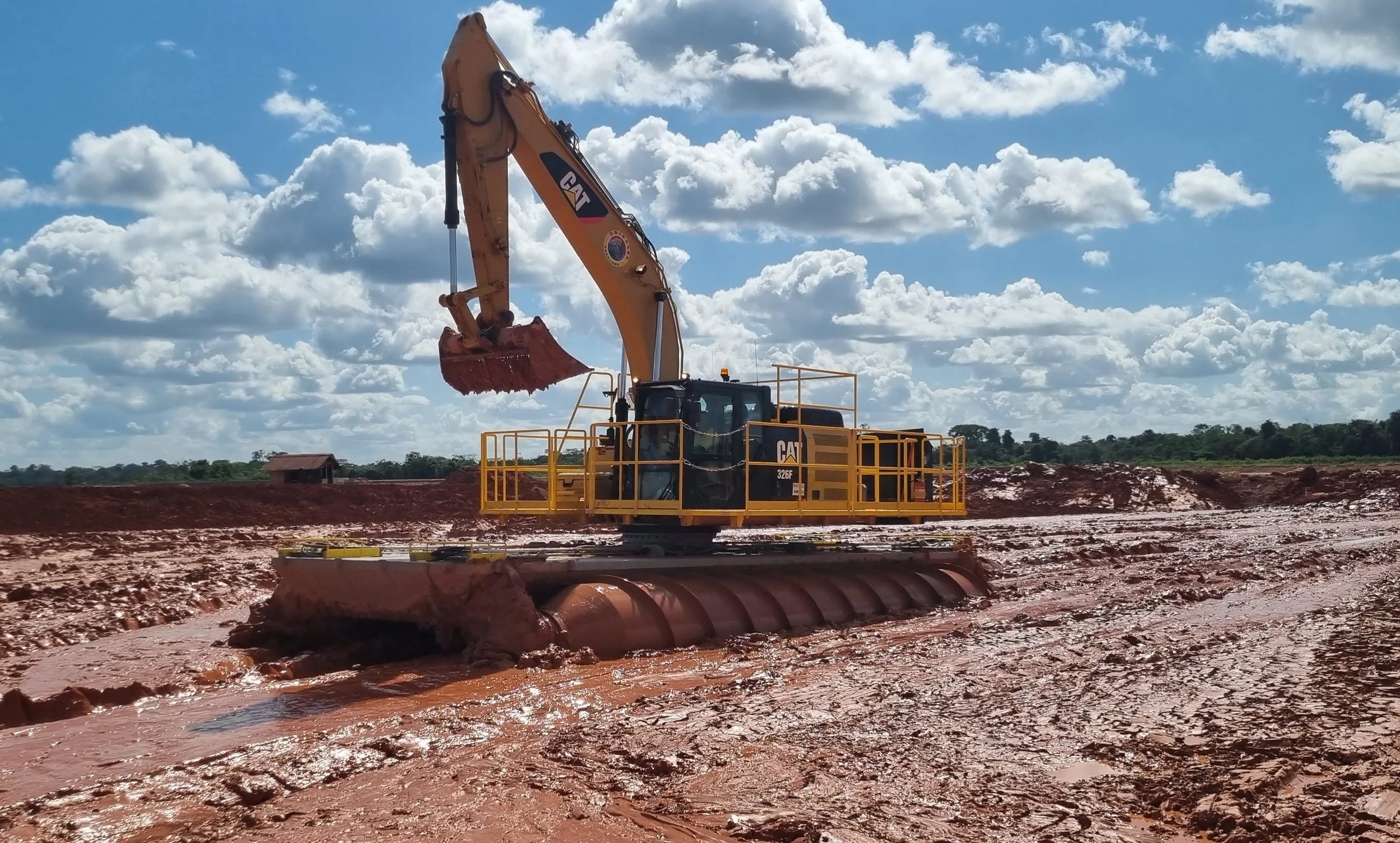
The Swampcat is more than a vehicle. It is a versatile platform that allows a wide range of equipment to be brought to locations that would otherwise be inaccessible. Depending on the project, the platform can be equipped with excavators, dredging pumps, drilling rigs, shredders, CPT equipment and other specialized machinery.
Applications
Tailings
Tailings facilities often contain extremely soft, wet and unstable materials. These conditions can make it impossible for conventional heavy equipment to access or work safely on the surface.
The Swampcat provides a solution by bringing specialized equipment into tailings areas. It can be fitted with excavators, dredging equipment, CPT rigs and other tools for mining and tailings management.
The platform can also support dewatering operations, helping to process and dry tailings and improve access to areas that would otherwise remain difficult to reach.
Dredging
Dredging projects in shallow water, marshes and soft sediment often require equipment that can operate close to or directly on the water.
The Swampcat can be equipped with dredging pumps and other excavation equipment to remove, transport or process sediment in difficult conditions. Its amphibious design allows it to move across soft ground and shallow water, making it suitable for dredging operations where conventional equipment cannot easily operate.
By combining screw-drive mobility with hydraulic dredging equipment, the platform can provide access to challenging dredging locations and support continuous material-handling operations.
Bush Clearing
In swamps, wetlands and other inaccessible areas, clearing dense vegetation can be difficult with conventional machinery. Soft ground, standing water and a lack of roads often prevent heavy equipment from reaching the worksite.
The Swampcat can be fitted with shredders and other vegetation-clearing equipment to remove dense bushes, trees and other vegetation. Its low-ground-pressure design allows it to work in areas where conventional tracked or wheeled machines may become stuck.
This makes the platform suitable for vegetation management, site preparation and bush-clearing projects in challenging terrain.
Drilling and CPT
Geotechnical investigations and exploration projects often require heavy equipment to be positioned on ground with limited bearing capacity. In tailings facilities, wetlands and other soft-ground environments, transporting a drilling rig or CPT system to the test location can be a big challenge.
The Swampcat can be configured to carry drilling equipment, exploration systems or a Cone Penetration Testing (CPT) rig. This allows soil investigations and in-situ testing to be carried out in locations where conventional CPT vehicles or drilling platforms cannot operate.
By providing a stable and mobile working platform, the Swampcat expands the range of locations where geotechnical testing and exploration can be performed.
Personnel Transport
Access to remote worksites is often limited by the absence of roads and the presence of soft, wet or flooded terrain. Transporting personnel and equipment through these areas can be time-consuming and challenging.
The Swampcat can be configured as a transport platform for personnel, tools and other project equipment. Its amphibious capabilities allow it to travel across difficult terrain and, where conditions permit, shallow water.
This makes it a useful solution for moving people and essential equipment to remote worksites, supporting operations where conventional transport vehicles cannot provide reliable access.
Dredge Spoils
Dredge spoils are often deposited in settling basins, storage areas or fields where the material remains wet and has very low bearing capacity. This can make it difficult to access the material, manage the site or carry out dewatering operations.
The Swampcat can be equipped with pumps, excavators and other specialized equipment to support the management and dewatering of dredge spoils. Its screw-drive system allows it to operate on soft sediment and in wet storage areas where conventional machinery may become immobilized.
By combining amphibious mobility with specialized equipment, the Swampcat can support material handling, dewatering and the management of dredge spoil storage areas.
How screw-drive technology works
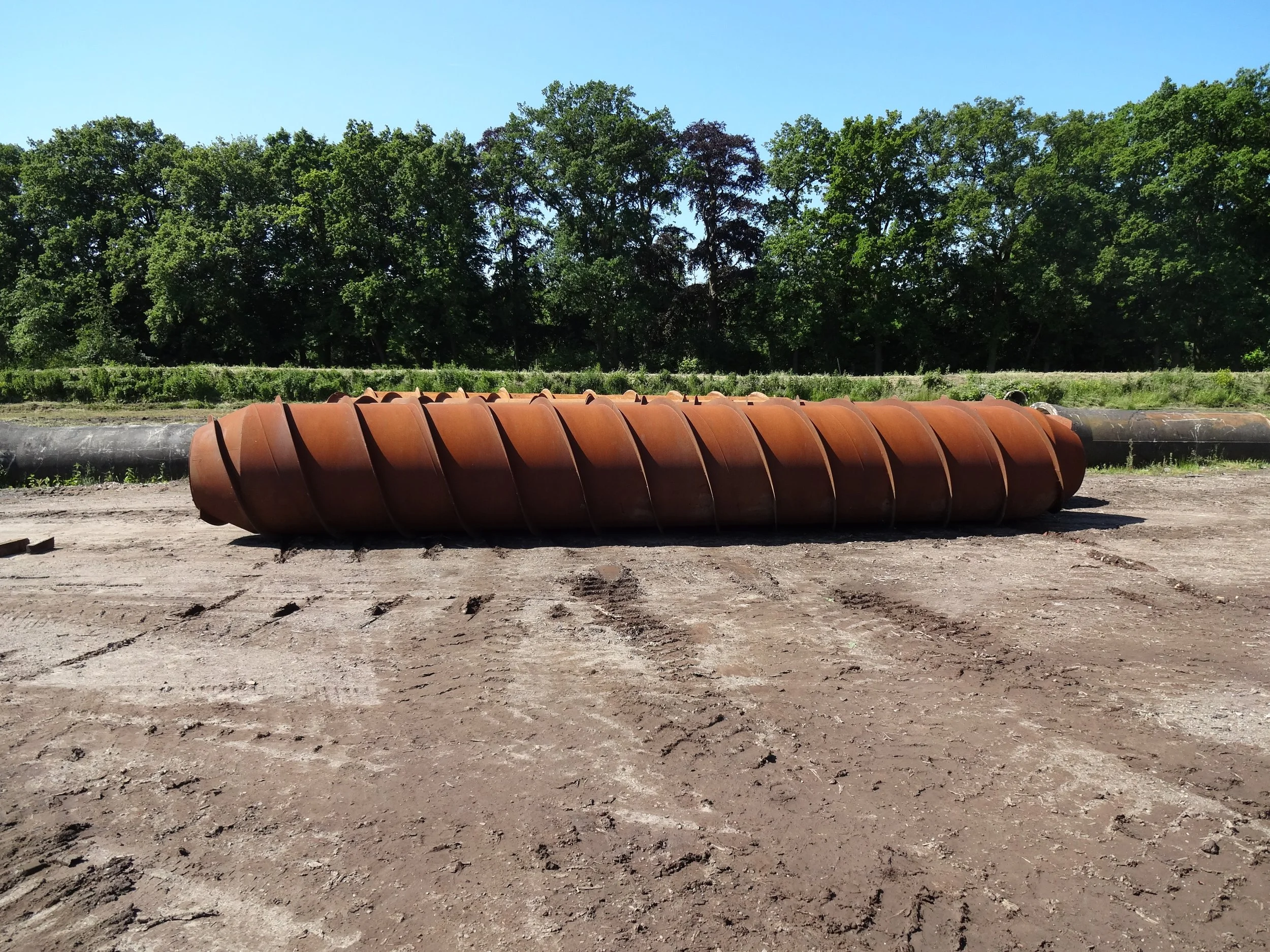
Instead of conventional wheels or tracks, the Swampcat uses rotating screw-shaped drive tubes. These large, buoyant cylinders provide both propulsion and flotation. As the screws rotate, their specially shaped surfaces generate traction and move the machine forward, even on terrain with very low bearing capacity.
The large contact area and buoyancy of the screw tubes help distribute the machine's weight over a wide area, reducing ground pressure. The platform can also operate in water and transition between soft ground and water, depending on the local conditions.
This combination of mobility, stability and versatility makes the Swampcat suitable for projects where access, ground conditions and environmental challenges make conventional machinery impossible.